|
Imagine you are flying home from a week-long vacation. In such a short time you visited landmarks, tasted different cuisines, interacted with new people, and experienced a completely different world. Although TRIP might not have been as relaxing as a vacation, this program has exposed me to new ideas, students, and skills in only a month.
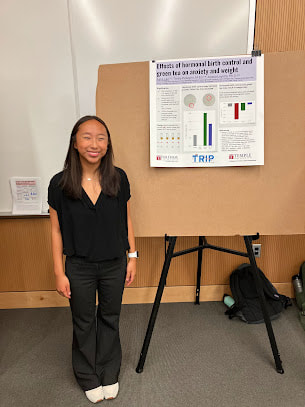
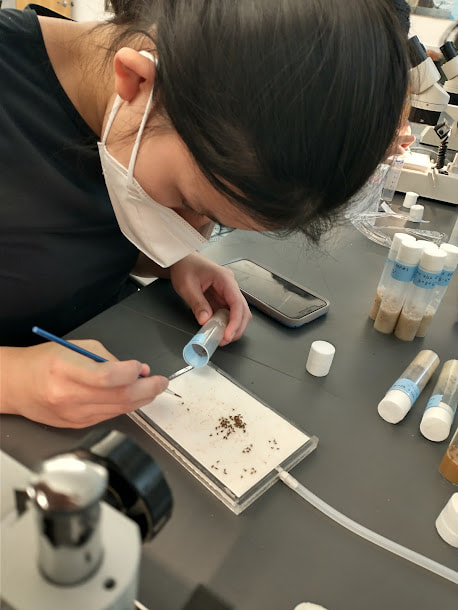
Additionally, talking to all of my new TRIP friends has inspired me to embrace my interests and feel confident in my goals, no matter how difficult. Everyone has shown tremendous support by helping to sort flies, assisting with computer troubles, and expressing genuine interest in each other’s endeavors. There were times when my project did not go as planned, but that is a part of the learning process and it’s not the end of the world to make some mistakes. My independent project studied the effects of hormonal birth control and green tea on anxiety and weight, which was slightly different from what I had first planned. Originally, I anticipated investigating metabolism and weight. However, I had to shift gears when my assay required a chemical fume hood. In the end, testing anxiety was beneficial because of its implications for mental health in pharmaceuticals. After running through four replications, I found that fruit flies who consumed hormonal birth control tended to be more anxious, which could mean that hormonal birth control may not be the best medication for those who struggle with mental illnesses like anxiety disorder. The resulting effects of birth control on weight changes varied dramatically for each replication with half resulting in weight loss and a half resulting in weight gain. As for the green tea, the fruit flies who consumed green tea were significantly less anxious and maintained a steady weight. When fruit flies consumed both birth control and green tea, the green tea helped the flies resist changes in weight and reduce anxiety. 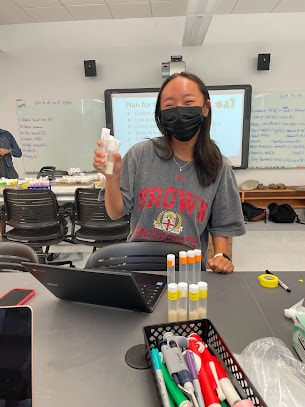 Overall, TRIP has intensified my desire to pursue a research-based career and given me the opportunity to make mistakes, develop research skills, build my confidence in speaking about science, and make friends with people I may not have ever been able to meet.
0 Comments
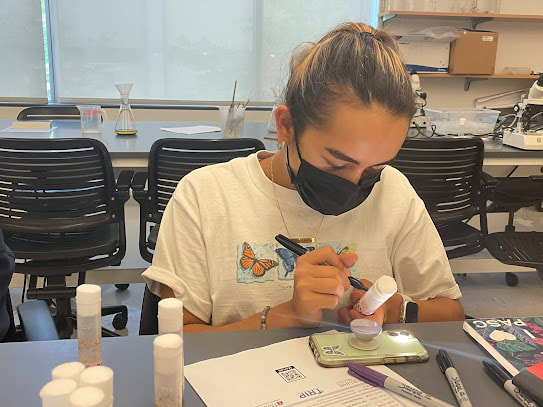 “Time flies like an arrow; fruit flies like a banana.” – Anthony G. Oettinger  This was the first result online when I typed in “Quotes about time flying” . I find it ironic that the first result just happens to be about fruit flies, but I find this to ring true. This quite humorous quote is reminding us of how fast our life passes by like an arrow propelling at a target, but to fruit flies, this is insignificant because they see in the present appreciating the good in front of them. 5 short weeks ago, I was fearful that I was going to break a micropipette and now I have strangely trained hundreds of flies to absolutely detest the scent of bananas (also ironic). I am beyond grateful for the skills, friends, and experiences TRIP has equipped me with, and will treasure these moments as I move to the next chapter in my life. This has also made me think, how often do we stop to take a second to appreciate the moment? TRIP has unexpectedly taught me this lesson. It is so easy to get caught up in the chaos of the world but spending hours on end with fruit flies and putting away distractions allowed me to more deeply appreciate the heart that goes into research as well as focus on the journey more than the destination, even when at times that feels impossible. My TRIP Independent project explored, “The Impact of Sleep Deprivation on Learning and Short-term Memory: Do De-stress Supplements That Claim to Improve Brain Alertness Really Work?” Creating my own assay from start to finish was an experience like no other. It was rewarding to see that it became a tangible reality that my other classmates were able to use as a tool to explore their projects as well. I am just going to say it: Training fruit flies is one of the coolest things I have ever done in my life. The feeling of the flies learning tasks and starting to hate the banana scent after experiencing discomfort gave me a deeper recognition of all that these tiny creatures can do to advance science even today. Creating my own assay from start to finish was an experience like no other. 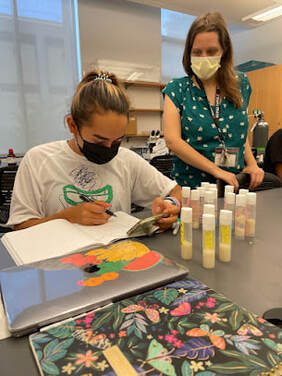 The exciting thing is that the flies were able to learn. It was amazing to analyze the differences and see if the OLLY de-stress and focus supplement was able to improve the way that a fly retains information even after being sleep deprived. And this all started, because one day I was wondering “Does cramming for a test really work when you don’t get enough sleep, and can its negative effects be ‘cured’?” I wanted to take a moment to thank Dr. Leystra, Dr. Purdy, Ms. Pellegrin, Diya (our wonderful TA), and my amazing classmates for their unconditional support and dedication to the program. If you are on the fence about applying to TRIP, do it, I guarantee that you won’t regret it. You will end up surprising yourself with what you are capable of and gain so much. Until next time, it’s been an incredible TRIP.   It feels like just yesterday was the first day of TRIP and now it's soon coming to an end. TRIP has been an “amazingly hard” experience, it was very fun to learn about fruit flies and perform experiments but it definitely wasn't easy. Trying to balance assignments and summer fun was very hard (and still is) but it was a truly rewarding experience that if I had the choice I would do again in a heartbeat. When I first joined the program I had never experimented with any kind of experiment on flies, but after this I can confidently say that I feel very comfortable working with flies now.
Nevertheless I loved the process of trying to make a research question and eventually getting to test my own research question on the fly. It was an amazing experience that I will never forget, and I will continue to use the skills that trip taught me later on in my life in future career prospects. TRIP has changed my life in every positive way and for that I am grateful to this program.
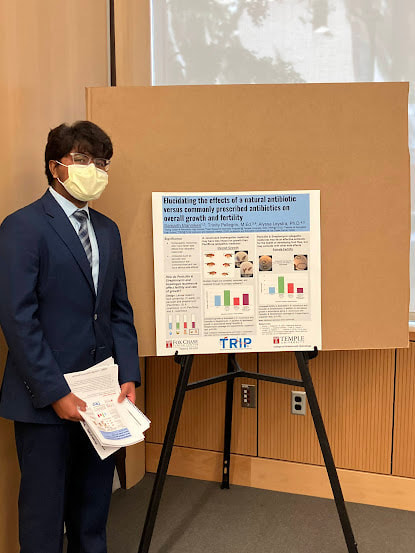
Hey, hey everyone! Wow, what a ride it has been; my time at TRIP has literally flown by (do you get it?) Unfortunately, this will be my last post for the program, though it has been quite a bittersweet ending!   Let me catch you up real quick. These past few weeks have been quite eventful. I have been focusing on how Penicillin & Streptomycin (a contemporary form of medicine) and Asparagus racemosus (a completely natural form of medicine) affect fertility and the rate of growth. The results, on the other hand, have been fruitful and outstanding. It seems that the natural antibiotic (A. racemosus) has been quite successful in proving its data amongst fertility and rate of growth. To understand how each assay was performed, I wanted to determine the correct concentration and dosage to provide to the fruit flies. Therefore, I tried to perform a microbiome assay for the flies themselves, but it failed. In fact, the higher dosages had more bacteria compared to the standard (calculated) dosage and medium dose. 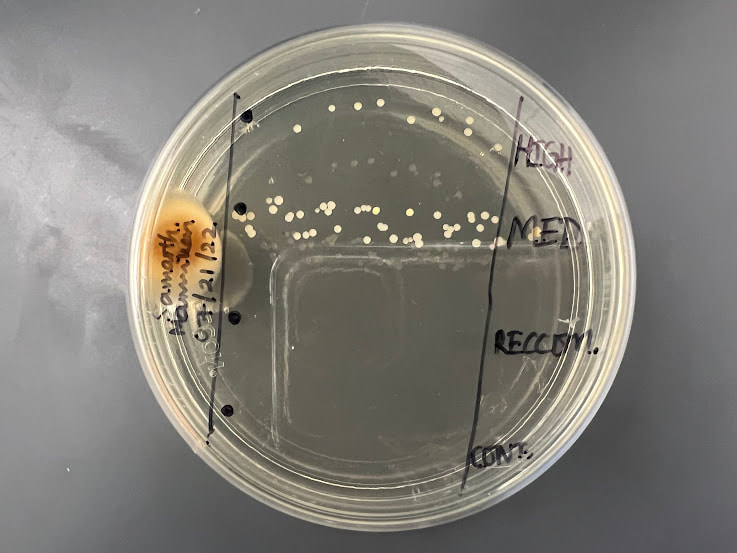 As a result, I decided to use the standard dosage of A. racemosus for the flies, along with the standard dosage of Penicillin & Streptomycin (PenStrep). For my first repetition, I prepared the female fertility assay by separating the females and allocating them into individual collection cages. Then, I placed grape plates with a bit of yeast paste (making the perfect fly soup!) enticing the female flies to lay their embryos. Compared to the control, the natural antibiotic had laid the most amount of embryos, and I nearly had 192 embryos for my third repetition! To illustrate the groundwork for my quantitative analysis, I calculated the embryos per female and the percent hatching; this depicts the success of the offspring. Both results had been in favor of the natural antibiotic.
Furthermore, I plan on collecting additional information on the side effects seen in the artificial antibiotic, as it is quite prevalent. Though it is extremely important to mention the fact that the natural antibiotic does not contain any side effects, the artificial antibiotic’s effectiveness may be reliant on this information. However, I am still comparing and analyzing this data, and I hope to present my findings at the symposium.
This wonderful program has given me a complete research experience, something incomparable to a high school classroom. I am certain that the conversations and experiences that occurred in the program will last forever, and I can't wait to go back to another lab! All in all, I’m truly grateful and happy to have made it this far, to be a part of this program and amazing community. I am completely ready for this final presentation, and though this may be the end of a TRIP of a lifetime, this is just the beginning of my wonderful career in the world of medicine!
Hello my name is Janiya Bradley. This trip experience has been one of a kind. I went in with low expectations of completing the program. But I'm happy to report that I made it! With the constant support from Dr. Leystra and Ms.P, I can say that I finished strong, and I know that they played a big part in my success.
I'm really worried about doing the symposium. There will be a lot of people here and I wanna show how much I learned during my time but I don't know if I will be able to project myself across that way. I'm so ready for it though. I can't wait to see the other projects and how they have come together! I remember writing in my TRIP application essays that the most valuable part of TRIP would be the hands-on lab experience. However, after the past five weeks, I realized how much more I have gained than just that. 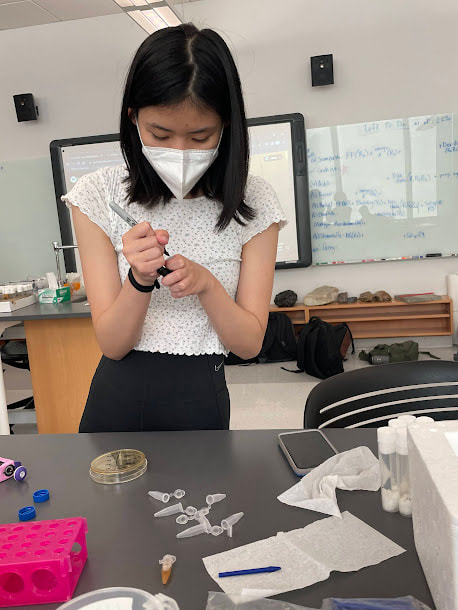
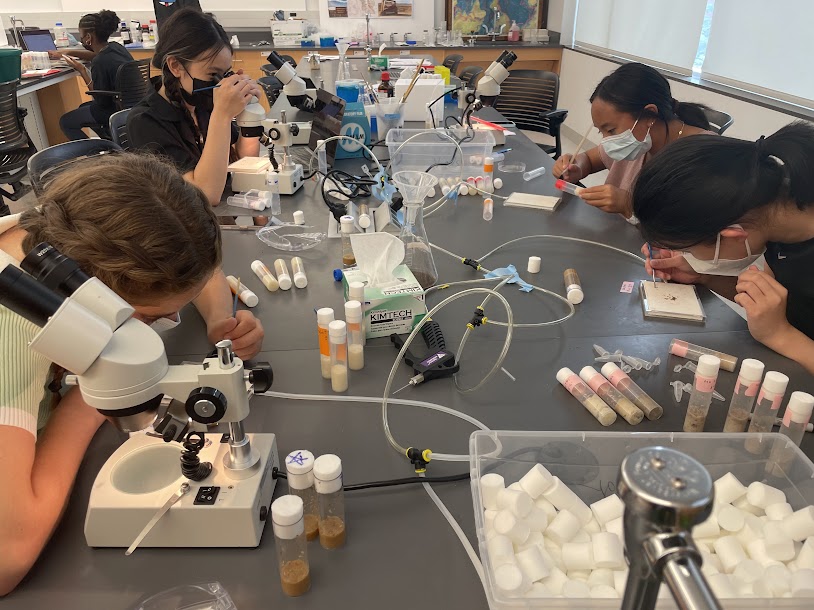 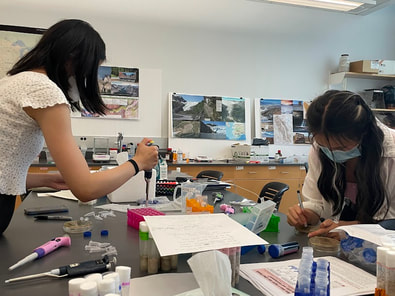 In addition to the hands-on portion, something important that I have also gained is the friends I’ve made and the TRIP family that I proudly have joined. Every time I come to the TRIP lab, I am excited not just to work on my project, but also to see my fellow TRIP peers. Their unique and easygoing personalities combined with the hard work and dedication they put into what they do continue to inspire and motivate me. Although we have only seen each other for ten days, I feel as if we have known each other for years, and I’m sure that we will continue to be lifelong friends. To me, the end of TRIP is just a new beginning because I have come out as a transformed person. Metaphorically, TRIP has helped me “eclose” from my pupal case, and the lessons I learned have helped me “metamorphosize” into a fruit fly with wings that can carry me further in exploring my passions for science. My mindset has changed a lot, as I have learned the importance of hard work, dedication, and perseverance. I have met so many amazing people and learned so many skills that I will carry throughout my life.
Wow! I gotta say, the past few weeks have gone by so incredibly quick. During Week 1, I already knew a decent amount about fruit flies and their development from other programs, but I can honestly say I now know so much more. It’s really cool how such a small creature can be so incredibly complex in so many ways. I will never be able to thank this program enough for teaching me so much, as well as continuing to fuel my love for research. 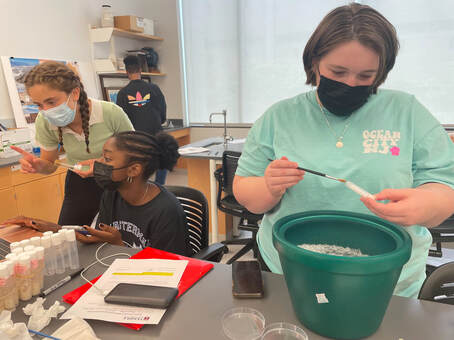 A few weeks ago, I shared that I would be completing a Proboscis Extension Response (PER) Assay in order to test the memory of fruit flies drugged with Prozac after being stressed with isolation. Sadly, this project did not work the way I wanted it to. A former TRIP student named Matt came in to help me better understand this assay which I am so incredibly grateful for. He helped explain everything step by step which was an amazing help, however, this assay wasn’t meant to be. Due to the time constrictions of TRIP, I would not have had enough time in order to perfect my technique, as well as be able to run actual trials to get data. After putting in a lot of effort, I ultimately determined, with the help of Dr. Leystra and Ms. P, that this assay was not worth all of the stress I was putting myself under. This particular assay is extremely tedious, time consuming, and was ultimately not for me. The worst part was that I accidentally ate 4 flies (EWWWW!!!). 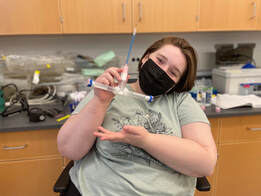 PER didn’t work the way I wanted it to, so I pivoted. My interest in Prozac, isolation, and memory never changed, so I continued to go with that part of the plan. One of my fellow TRIPmates, named Anjali Verma, developed her own assay. As of right now, it does not have a name, however, I always joke around about calling the Minion Assay. This assay involves heat shocking flies, which causes them pain while they are in a vial with the scent of banana. The flies are then put into a vial with no banana and put into room temp water. After this is repeated, they are put into a T-Maze with banana scent on one side and no scent on the other. If they are properly trained, they will go away from the banana scent, wanting to not be in pain, even though flies without this training would typically go towards the banana. For my experiment specifically, I am using control flies, flies treated with Prozac, flies that have been in isolation since their pupal stage, and flies that were both treated with Prozac and isolated since their pupal stage. As of right now, I am currently analyzing data and am unsure if this experiment will work or not. I do have high hopes, but anything can happen in research. Data is data I guess we’ll have to wait and find out.
I’m sad to say that my time at TRIP has finally come to an end. I won’t lie; on the first day of the program, I wasn’t sure whether I would enjoy my Tuesday and Thursday mornings at Temple University. I was bombarded with new information and felt challenged while learning about drug stock dilutions. However, as the program shifted focus towards our independent projects and I started to make friends with my amazing TRIP-mates, I began to have so much fun. 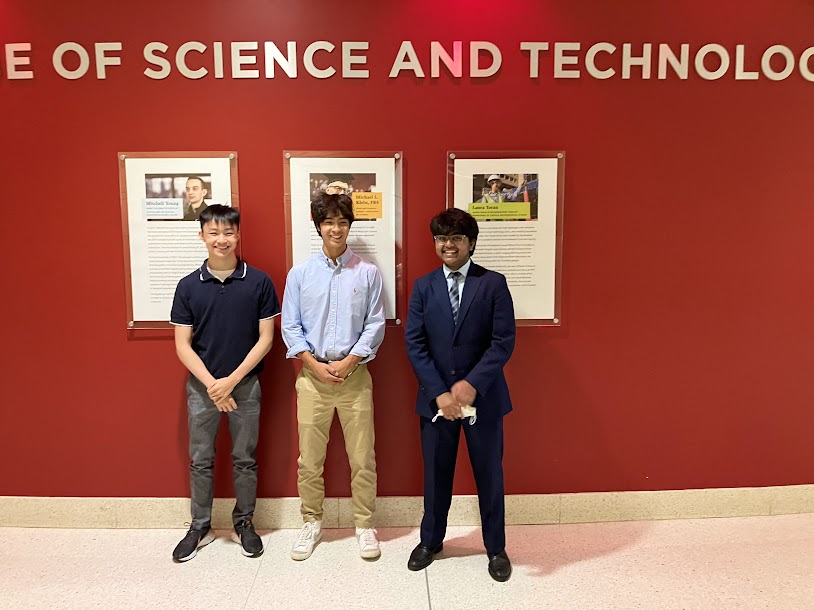
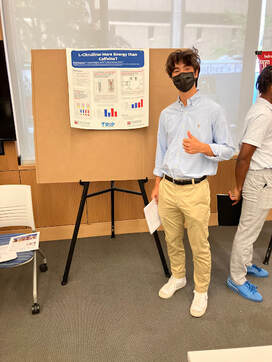
With some extra time in the lab, I also sought to compare the anxiety level of L-Citrulline supplemented flies with caffeine supplemented flies since I often find myself feeling anxious after consuming caffeinated drinks. After 3 repetitions, I found that L-Citrulline may cause non-sleep deprived fruit flies to be less anxious than their caffeine-consuming counterparts. I was very happy with my results and now look for pre-workout products with higher L-Citrulline content. 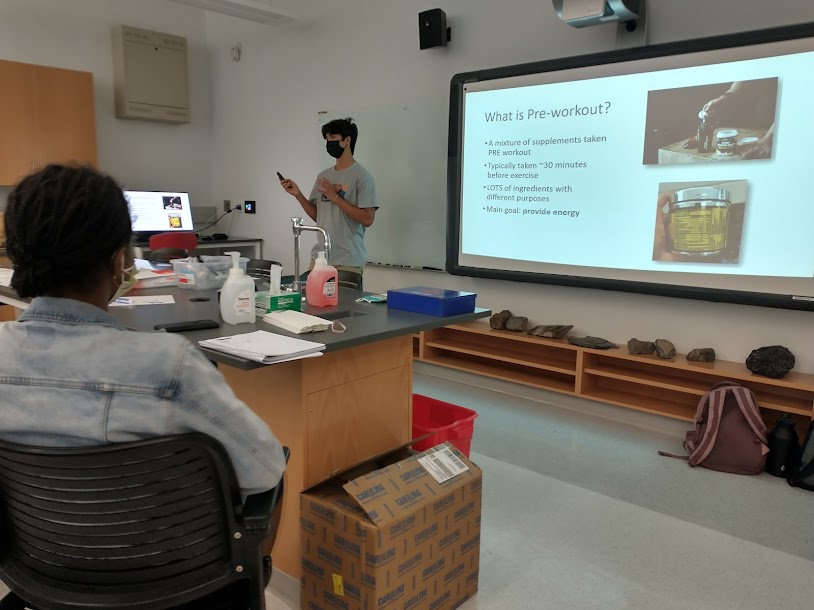 I am so glad that I decided to apply to TRIP because it was so much more than just a lab. I will say that anyone looking to apply to TRIP in the future should expect a grind: completing homework packets, staying late to sort flies, repeating an experiment because you missed an important step, etc. But in the end, I left with invaluable hands-on experience, confidence to pursue a STEM-related career in the future, and countless memories (most notably getting food from the food trucks at Temple every day with one of my friends I made at TRIP). I even sharpened skills such as communication, creativity, and problem-solving that will undoubtedly translate to areas other than STEM. Overall, I feel super rewarded with my experience and could not think of a better way to spend my summer. Thank you to Dr. Leystra, Ms. P, Diya, my TRIP-mates, and everyone else who made TRIP such a great experience for me. 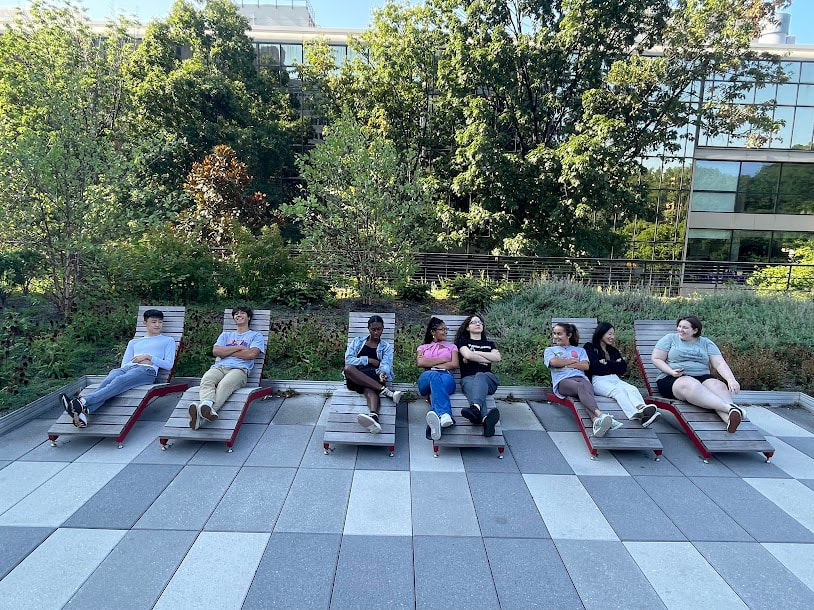 Wow. It’s hard to believe how fast this TRIP has gone by! Coming into the lab twice a week for 5 weeks seemed like a lot when we first started, but now the program has come to a close and the final presentation is less than a week away. It feels like just yesterday I was walking into the lab for the first time, eager and ready to do real scientific research. I never would have imagined that in just 5 weeks I would be able to sort flies according to their gender, make grape plates, perform assays, and take microscopic fly pictures! Thank you to Dr. Leystra, Ms. Pellegrin, and Diya as they helped me perform my assays efficiently. 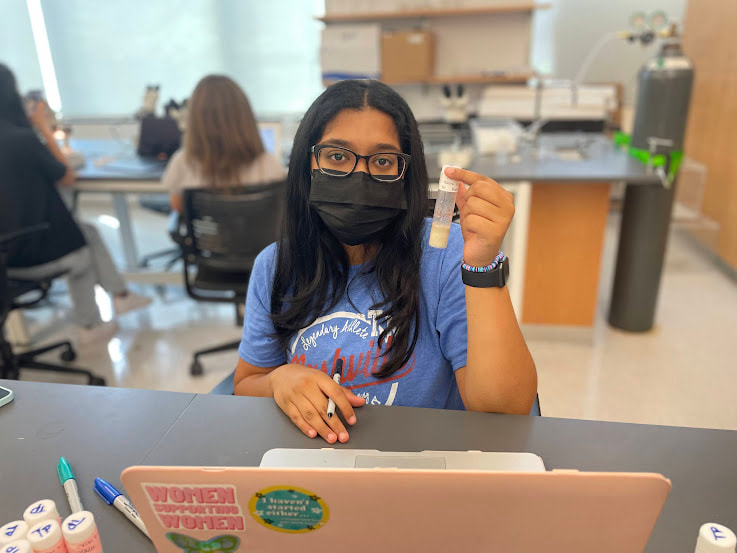 Now let's catch up on everything I’ve been doing for the past 5 Tuesdays and Thursdays in the lab. I have finally started conducting my research for my independent project. Over the past few weeks, I have been exploring the effects of Lipitor (cholesterol medication) on fruit fly energy and overall health. Lipitor became an interest of mine because of how many people have high cholesterol and take Lipitor to lower it. Around 38% of the population has high cholesterol and 11% take Lipitor! But what happens when someone continues to take Lipitor after regulating their cholesterol to a normal level? This is precisely what I wanted to test on my fruit flies. Since fruit flies already have normal levels of cholesterol, introducing Lipitor into their diet would essentially be the same as a person taking Lipitor when their cholesterol is in a normal range. 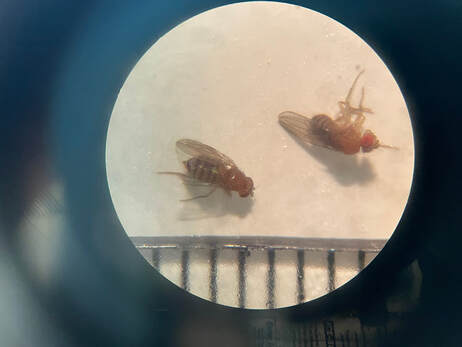 Now let's catch up on everything I’ve been doing for the past 5 Tuesdays and Thursdays in the lab. I have finally started conducting my research for my independent project. Over the past few weeks, I have been exploring the effects of Lipitor (cholesterol medication) on fruit fly energy and overall health. Lipitor became an interest of mine because of how many people have high cholesterol and take Lipitor to lower it. Around 38% of the population has high cholesterol and 11% take Lipitor! But what happens when someone continues to take Lipitor after regulating their cholesterol to a normal level? This is precisely what I wanted to test on my fruit flies. Since fruit flies already have normal levels of cholesterol, introducing Lipitor into their diet would essentially be the same as a person taking Lipitor when their cholesterol is in a normal range.
These past 5 weeks taught me to have a greater appreciation for the scientific research involved in testing the side effects of widely used drugs. I am extremely grateful for the opportunity to conduct my research from start to finish and work alongside some of the best people I’ve met: My TRIP Family! I am looking forward to applying the skills I learned in my future endeavors. This may be the end of an amazing TRIP, but it’s certainly not the end of mine!
Hi again! I can’t believe that TRIP has ended. It has been a great experience learning from Dr. Leystra and Ms. Pellegrin, and learning about my classmates and their projects. I never thought that in such a short period of time I would have completed such a project. 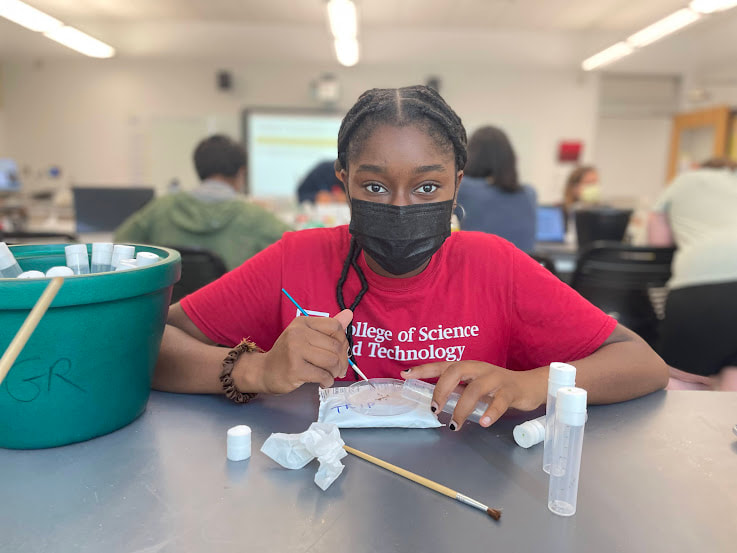
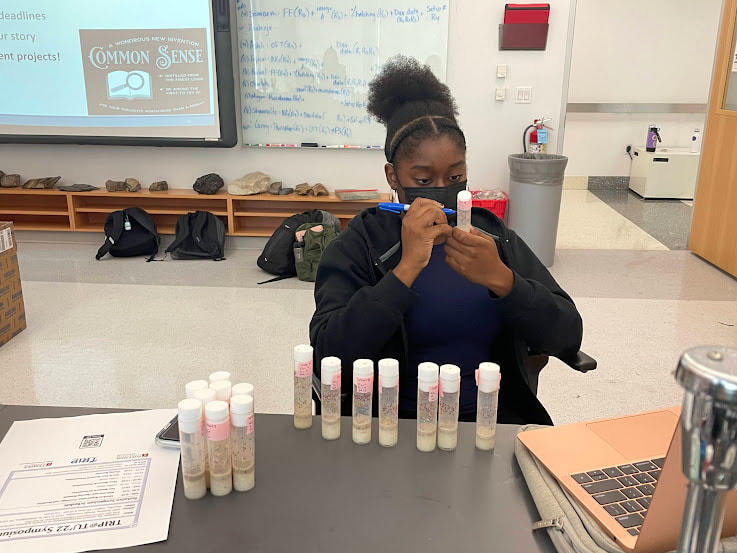 After replicating my experiment four times, I found that caffeine had the greatest effect on the energy levels of the flies. This was expected, as we know that caffeine gives humans an energy boost. What I found especially interesting was that the flies that were fed caffeine in their food and deprived of sleep had higher energy levels than those that were well rested and had caffeine.
|
Archives
April 2024
Categories
All
|



 RSS Feed